


Website Development · Concept
Blog Website Development for Content Publishers
A blog website concept by MeridSpace for publishing fashion, lifestyle, entertainment and general articles, with content management, categories, author profiles, search, SEO settings and advertising support.
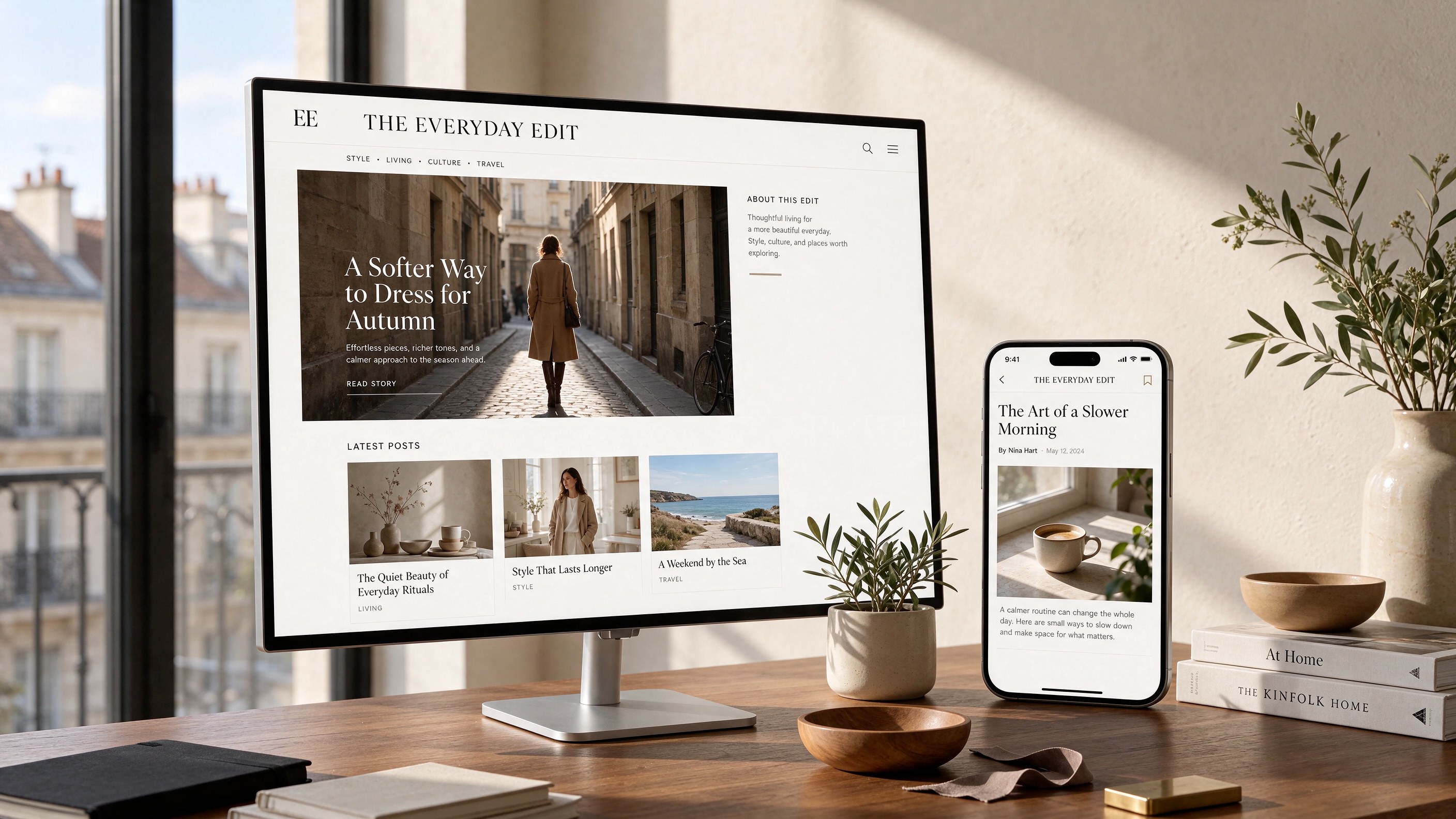
A blog website gives a person, brand or media business a place to publish articles and share information with readers. It can cover one subject, such as fashion or technology, or several topics, such as entertainment, lifestyle, business, education and general news. For the owner, the website is more than a collection of articles. It is a publishing platform that needs to make writing, editing, organising and promoting content straightforward.
MeridSpace presents this Blog Website as a concept for publishers who want a professional website where readers can find useful articles and editors can manage content without editing website code. The design can be adapted for different publishing needs, including fashion and lifestyle blogs like Daily Fashion Ideas, as well as general-interest and entertainment websites like GistTip.
A clear homepage for readers
The homepage is often the first page visitors see. It should help them understand what the blog covers and guide them to articles they may want to read. A suitable layout can include a featured article, latest posts, popular stories and topic sections. The arrangement will depend on the subject and publishing style of the website.
For a fashion blog, the homepage may give more space to outfit ideas, beauty tips, trends and style guides. A general-interest blog may give more attention to entertainment, news, lifestyle, technology and other categories. The layout should make these sections easy to recognise without making the page crowded.
Article cards can show a featured image, title, short introduction, category and publication date. Readers should be able to understand what an article is about before opening it. The homepage can also include links to important pages, a search feature and a newsletter subscription area where required.
Categories and topic organisation
As a blog grows, its content needs a proper structure. Categories help group related articles so readers can find more information about a subject. An owner may create categories such as fashion, beauty, lifestyle, entertainment, business, technology, health or travel, depending on the purpose of the website.
Each category can have its own page showing articles that belong to that topic. The page may include a short introduction, featured content and a list of recent posts. This gives readers a useful way to explore the website and helps the publisher keep the article archive organised.
Tags can also be used for more specific subjects within a category. However, categories and tags should be planned carefully. Creating too many similar sections can make navigation confusing and lead to pages with very little content.
Article pages built for reading
The article page is one of the most important parts of a blog website. Readers visit it to get information, follow a story or learn something new. The page should present the article in a clean layout with readable text, suitable spacing and images that support the content.
An article can include a title, featured image, author name, publication date, category and the main body. The content editor may support headings, paragraphs, lists, links, quotations, images and embedded media. These tools help writers organise long articles and make them easier to follow.
Related articles can appear below or beside the main content, giving readers a reason to explore more pages. Social sharing links may also be included so visitors can share useful posts. The design should keep attention on the article instead of filling the page with unnecessary distractions.
Content management dashboard
A blog owner should not need a developer every time a new article is published. The proposed platform can include an administration dashboard where authorised users manage the website's content and basic settings.
From the dashboard, an editor could create a new post, add a title, write the article, upload images, select a category and enter the required SEO information. The editor could save the article as a draft, preview it and publish it when it is ready. Existing posts could also be updated, unpublished or moved to another category where necessary.
A useful content management system should make common publishing tasks simple. It should also help prevent accidental changes by separating ordinary editing permissions from more sensitive website settings.
Authors and editorial management
Some blogs are managed by one person, while others have several writers and editors. For a multi-author website, the platform can support individual author profiles. An author page may include a display name, short biography, photograph and list of published articles.
Different user roles can be created for the publishing team. For example, a writer may be allowed to create and edit their own drafts, while an editor can review submissions and publish approved content. An administrator may manage user accounts, categories and website settings.
This arrangement helps a growing publication organise its work. It also gives readers a way to see who wrote an article, which can be useful for websites where author information is important.
Search and article discovery
Readers should be able to find articles without checking every category manually. A website search feature can allow visitors to enter a word or phrase and view matching posts. Search results may show the article title, image, short description and publication date.
The website can also provide related articles, popular posts and category links. These features help readers move from one useful article to another. They are especially helpful for blogs with large archives, where older articles may still answer questions or attract visitors from search engines.
Search and discovery features should be designed to return useful results. Clear article titles, relevant categories and sensible tags can make the content easier to organise and find.
Search engine optimisation settings
Search visibility matters to many blog owners because people often find articles through search engines. The website can provide fields for an SEO title, meta description and URL slug for each article. These settings allow editors to prepare page information that describes the content clearly.
The platform can also use clean page addresses, organised headings, image alternative text and an XML sitemap. Structured data may be added where it is appropriate for the content type. Canonical URLs and other technical SEO settings can also be considered during development.
SEO features help prepare a website for search engines, but they do not guarantee rankings or traffic. Results depend on the usefulness and quality of the articles, competition, website performance, technical setup and other factors. The content should be written for readers first, with relevant search terms used naturally.
Image and media management
Images are important for many types of blogs. Fashion and lifestyle websites often depend on photography, while entertainment and general-interest publications may use article images to help readers recognise a story. The platform should provide a simple way to upload and manage media.
Editors may be able to set a featured image for each article and add other images within the body. Image descriptions can be included where needed, and the website can use suitable image sizes for article pages, category listings and homepage cards.
Images should be compressed and displayed in suitable dimensions to help page loading. Publishers should also make sure they have permission to use the photographs, illustrations and other media they upload.
Advertising and monetisation options
A blog may start as a personal publishing project and later become a source of income. The platform can be planned to support different monetisation methods, depending on the publisher's audience and business model.
Advertising spaces may be included in suitable areas, such as the homepage, category pages or article layout. If the publisher applies for Google AdSense or another advertising network, the website can be prepared to accommodate the required ad placements. Approval is controlled by the advertising provider and cannot be guaranteed by website development alone.
Other options may include sponsored articles, affiliate links, newsletter promotions, paid memberships or partnerships. These features should be selected based on the website's content and audience. Any sponsored or affiliate content should be presented transparently to readers.
Newsletter and reader engagement
A newsletter can help a publisher keep in touch with readers who want updates about new articles. The website may include a subscription form where visitors can enter their email address and give permission to receive updates.
Depending on the selected email service, subscribers could receive new article announcements, weekly summaries or other messages. The integration should be configured with the provider chosen by the website owner. The platform should also provide a clear way for subscribers to stop receiving messages.
Other engagement options may include comments, contact forms and social media links. These features can help readers interact with the publication, but they should be managed carefully to reduce spam and abusive submissions.
Responsive design and mobile reading
Many people read blogs on their phones, so the website should work well across different screen sizes. The navigation menu, article text, images and content cards should adjust to smaller screens without making the page difficult to use.
Buttons and links should be easy to tap, and the article text should remain comfortable to read. Images should fit the available space without unnecessary stretching. The website should also be tested on common browsers and devices before launch.
A responsive layout is not only about making the homepage fit on a phone. Readers should have a good experience on category pages, search results, article pages and other important sections as well.
Website speed and technical maintenance
A blog can contain many articles and images over time. If the website is not planned properly, pages may become slow as the content library grows. Development should consider image optimisation, caching, clean code and suitable hosting for the expected level of traffic.
Regular maintenance may include software updates, security checks, backups and monitoring. The owner should have a way to recover important content if a technical problem occurs. The hosting setup should also be reviewed as traffic and storage needs increase.
Security and publishing permissions
The administration area should be protected because it controls the website's articles, users and settings. The platform can include secure login, password protection, role-based permissions and appropriate session controls.
Only authorised users should be able to publish content or change important settings. Forms should be validated, and uploaded files should be handled safely. Backups and regular updates should form part of the website's maintenance plan.
Development approach by MeridSpace
MeridSpace can begin a blog website project by understanding the publication's subject, target readers and publishing plans. A fashion blog may need a visual layout with strong image presentation, while an entertainment or general-interest website may need several topic sections and a layout that handles frequent publishing.
After the requirements are agreed, the website structure can be planned. This includes the homepage, article template, categories, author pages, search, contact information and administration dashboard. The design should reflect the publication's identity while keeping reading and navigation simple.
Development can then cover the content management features, article publishing workflow, media handling, SEO fields and any agreed integrations. The website should be tested on desktop and mobile devices, with checks for publishing, editing, navigation, search and page loading.
Before launch, the publisher can add its branding, categories, policy pages and initial articles. Advertising, newsletter and analytics services can be configured where they are part of the agreed scope. Ongoing support and improvements can be planned according to the needs of the publication.
Who can use this type of website?
This blog website concept can suit fashion bloggers, lifestyle publishers, entertainment websites, news and information platforms, personal writers and businesses that want to publish regular articles. It can also support a small editorial team that needs multiple authors and a shared content management system.
The final website does not need every feature described in this concept. A personal blog may only need articles, categories and a simple dashboard. A larger publication may need author management, advertising spaces, newsletter tools and more advanced editorial controls. The right features should be selected based on the publisher's actual plans.
Conclusion
A well-built blog website gives publishers a reliable place to share articles and gives readers an easy way to find and read them. It brings the design, content management, categories, author information and search features together in one platform.
Through this concept, MeridSpace presents a practical approach to building blog websites for different subjects and publishing styles. Whether the focus is fashion, lifestyle, entertainment or general information, the website can be planned around the publisher's content and audience, with room to grow as the publication develops.
More projects

MeridianCart – Multi-Vendor E-Commerce Marketplace Development
MeridianCart is a multi-vendor marketplace developed by MeridSpace, bringing buyers and sellers together through product listings, seller stores, carts, checkout, payments, order management, delivery and shipment tracking.
Read more →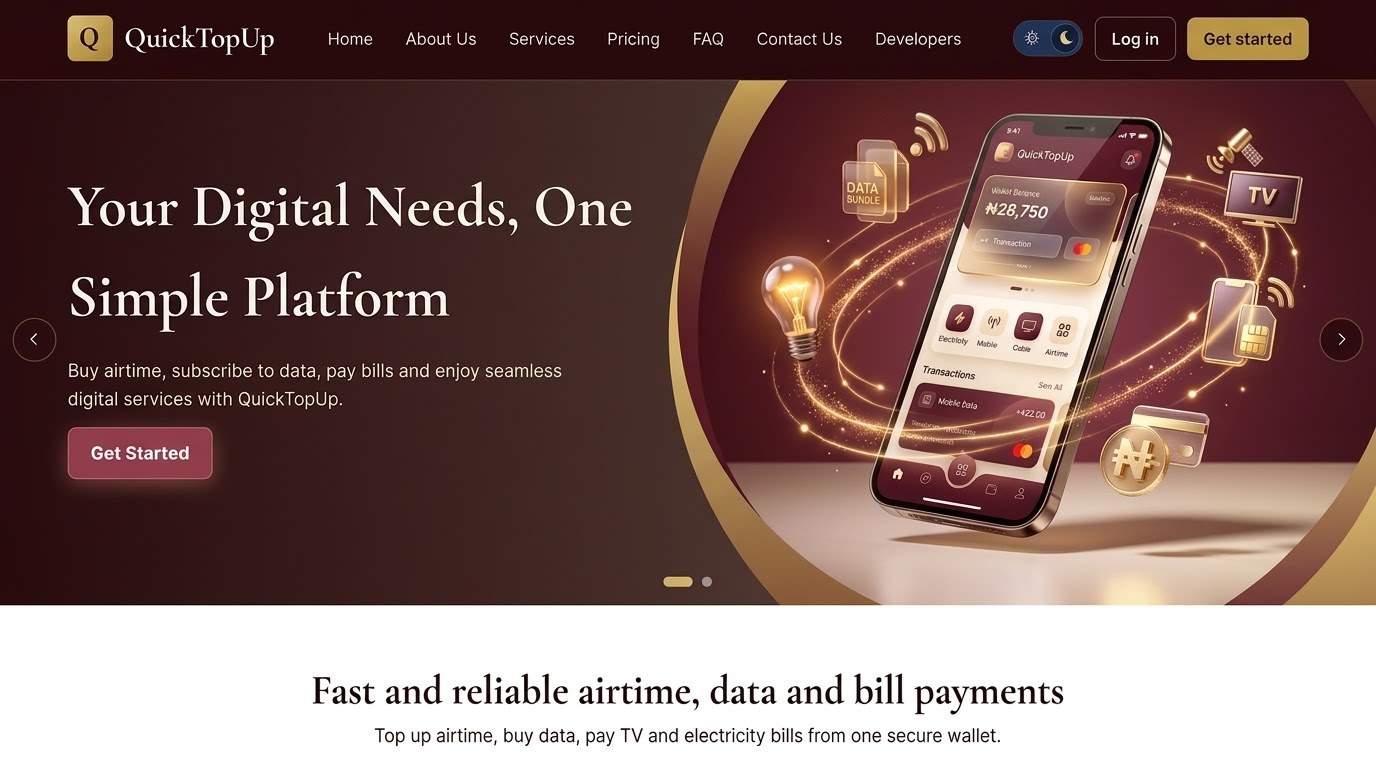
QuickTopup – A Complete VTU Website for Starting Your Own Digital Services Business
QuickTopup is a complete VTU and digital payment platform for selling airtime, data, cable TV subscriptions, electricity, exam pins and recharge cards. It features customer accounts, wallet funding, automated transactions, API integration and pricing management.
Read more →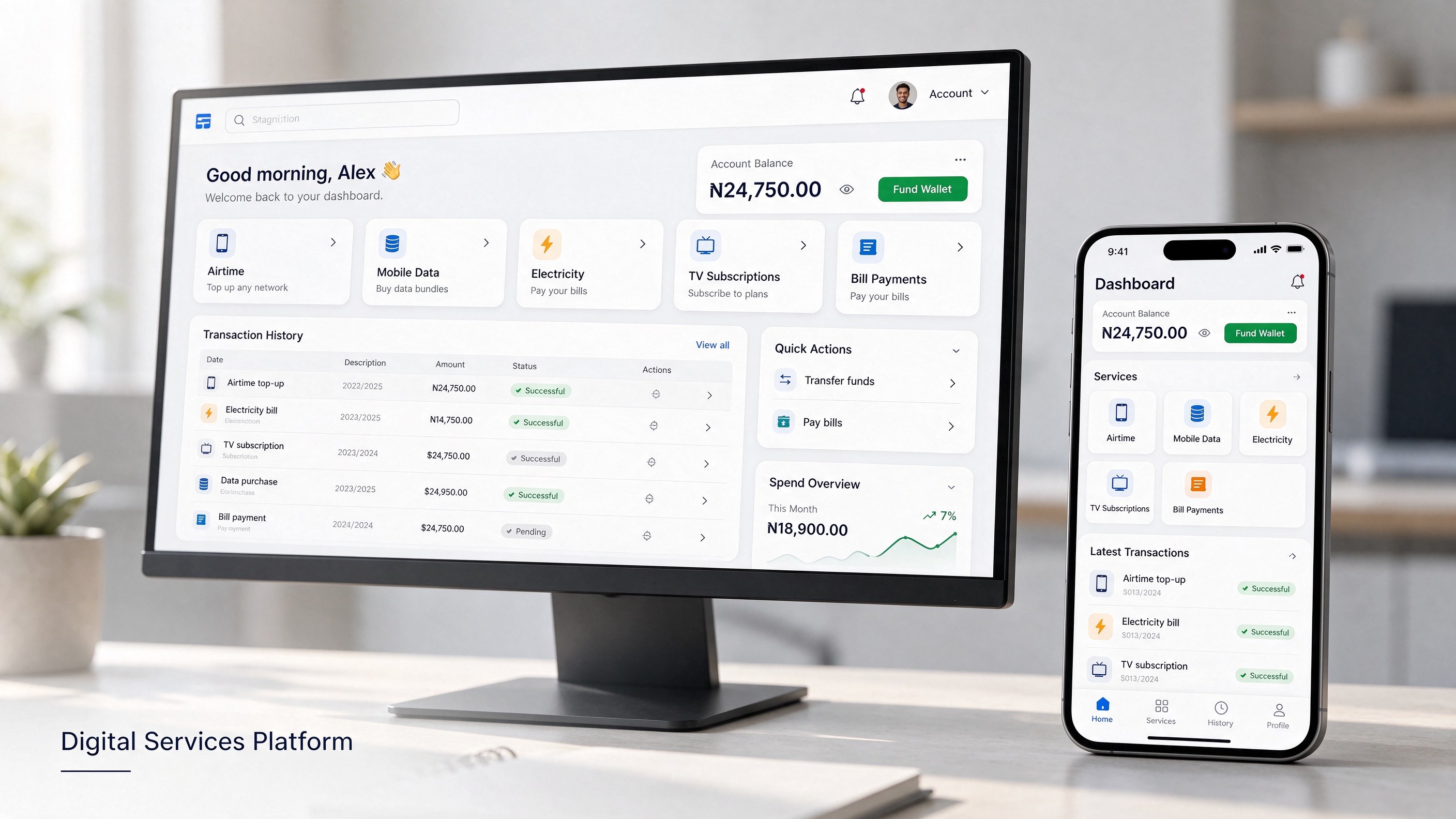
Digital Services Platform for Everyday Business Needs
A digital services platform concept by MeridSpace that brings service listings, customer requests, payments, order tracking and administration into one place, helping businesses manage digital services and customer activity.
Read more →