
SEO & Digital Marketing · Service
SEO Audit Framework for Website Performance and Search Visibility
SEO audit framework by MeridSpace for reviewing websites and identifying search optimisation issues. It covers technical SEO, page content, performance, mobile usability, indexing, internal links and search visibility.
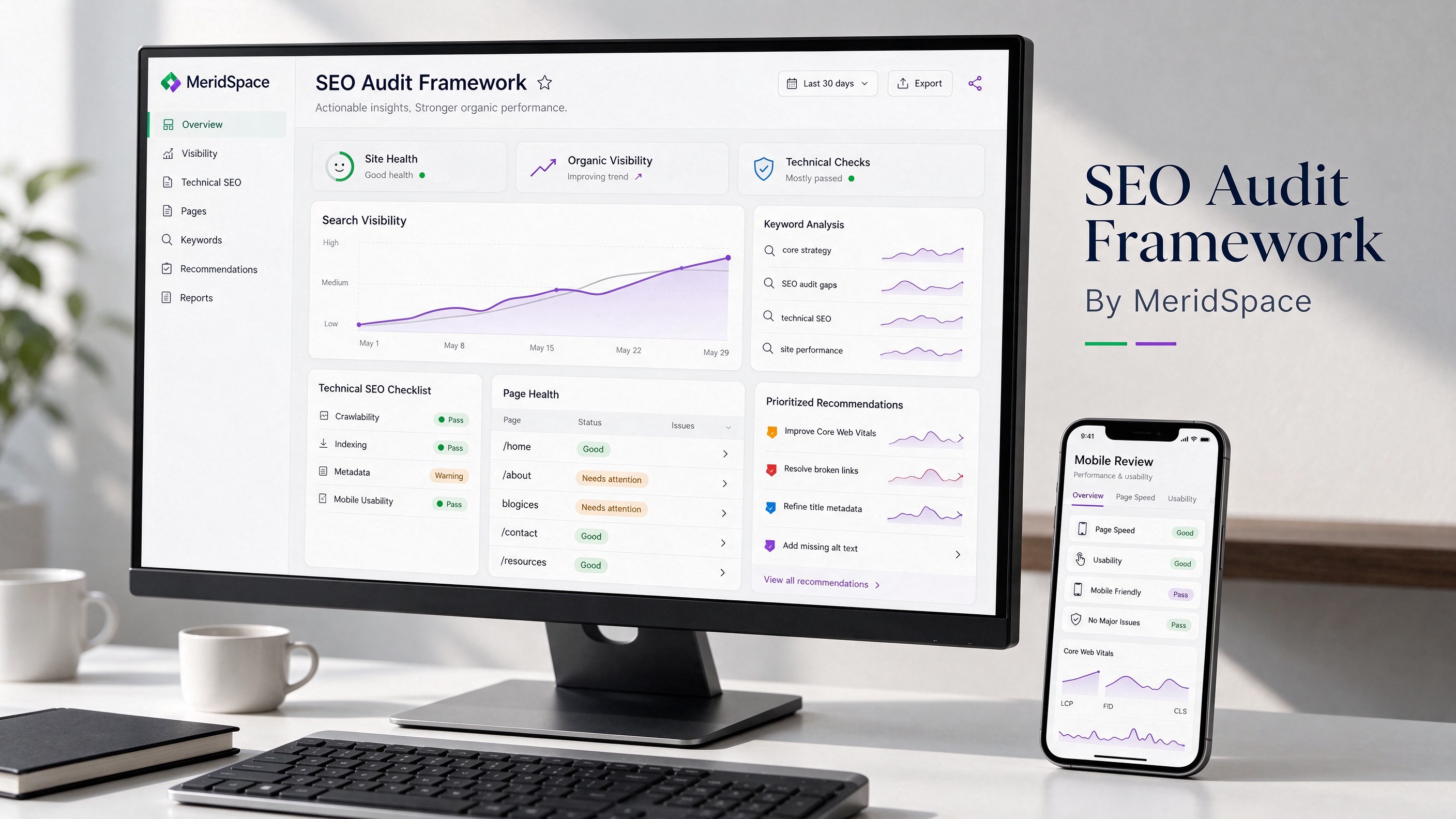
A website needs more than an attractive design to perform well in search engines. It also needs a clear structure, useful content, good loading speed and technical settings that allow search engines to find and understand its pages. When these areas are not properly managed, a website may struggle to appear in relevant search results or turn visitors into customers. The SEO Audit Framework is a project developed by MeridSpace to provide a clear way to review these important areas and identify where improvements are needed.
The framework is designed to help businesses understand the condition of their websites from an SEO point of view. It brings technical checks, content reviews, page optimisation and performance analysis into one organised process. Rather than making random changes based on guesses, a business can use the audit to understand what is working, what needs attention and which improvements should be handled first.
MeridSpace approaches SEO audits as part of a wider website improvement process. The aim is not simply to find errors or produce a long list of technical terms. It is to explain how website issues can affect search visibility, user experience and business goals, then provide practical recommendations that can guide the next steps.
Project Overview
The SEO Audit Framework provides a structured method for reviewing a website and checking whether it follows important search engine optimisation practices. It considers how search engines access the website, how pages are organised, whether the content answers users' questions and whether visitors can use the website comfortably on different devices.
Every website has different needs. A business website may need stronger service pages, while an online store may need improvements to product descriptions, category pages and technical settings. A blog may need better content organisation, internal links and clearer page titles. The framework is flexible enough to review these different website types while keeping the main audit process organised.
The review is divided into key areas so that problems can be identified and explained clearly. This makes it easier for business owners, marketing teams and developers to understand the work required.
Technical SEO Review
Technical SEO covers the website settings and structure that help search engines access, crawl and understand its pages. A website may contain useful information, but technical problems can make it difficult for search engines to discover or process that information correctly.
The audit begins by reviewing important technical areas such as website accessibility, crawlability, indexing settings, URL structure and page responses. It checks whether important pages can be accessed and whether pages that should not appear in search results are handled correctly.
The review also considers the XML sitemap. A sitemap helps search engines discover important website URLs, especially when a site contains many pages. It should be kept accurate and should not include unnecessary or unavailable pages. The robots.txt file is another area to review because it gives search engine crawlers instructions about which parts of a website they can access.
Redirects and broken links are also important. When a page has moved, the correct redirect should guide visitors and search engines to its new location. Broken links can create a poor experience and may prevent visitors from reaching useful information. The framework helps identify these problems so that they can be corrected.
Website Structure and URL Organisation
A clear website structure makes it easier for visitors to find information and helps search engines understand how pages relate to one another. When a website has confusing navigation, unnecessary page levels or poorly organised URLs, users may struggle to find what they need.
The SEO audit reviews how the main sections of the website are arranged. It looks at whether important pages can be reached easily, whether categories are organised logically and whether the navigation reflects the actual content of the website.
URL structure is also considered. A good URL should be understandable and should give visitors an idea of what a page contains. For example, a service page with a clear address is easier to recognise than one with a long collection of unrelated characters or unnecessary parameters.
The review also considers duplicate URLs and unnecessary variations of the same page. Where several URLs show similar content, the website may need suitable canonical settings or other corrections to make the preferred page clear.
On-Page SEO Review
On-page SEO focuses on the content and page elements that help search engines and visitors understand what each page is about. These elements include page titles, meta descriptions, headings, body content, images and internal links.
The framework checks whether important pages have clear and relevant title tags. A page title should describe the page accurately and include the main topic naturally where appropriate. It should also be useful to people who see it in search results. Titles that are too vague, repeated across several pages or unrelated to the page content may need improvement.
Meta descriptions are reviewed as well. Although they are not a direct ranking factor in the same way as some other SEO elements, a clear description can help people understand what a page offers before clicking. Each important page should have a useful description that matches its content.
Headings help organise information into sections. The audit reviews whether headings follow a clear order and whether they describe the information below them. Pages should not use headings only to make text appear larger. Each heading should help visitors understand the subject of that section.
The review also checks whether page content is useful, clear and relevant to the intended audience. Content should answer real questions and explain products or services properly. Repeating keywords without adding useful information does not create a good page. The focus should be on clear writing that helps visitors make decisions.
Keyword and Search Intent Analysis
Keywords help connect website content with the words people use when searching online. However, choosing keywords is not only about finding popular search terms. A business also needs to understand why people use those terms and what information they expect to find.
The SEO Audit Framework considers the main topics a website wants to rank for and whether its pages match the search intent behind those topics. Someone searching for information may need an educational article, while someone searching for a particular service may expect a service page with details and a clear way to make contact.
The review can identify pages that target similar keywords without having a clear difference in purpose. It can also identify important topics that the website has not covered. These findings can guide content improvements and help the business create pages that serve a clear purpose.
Keyword placement should remain natural. Important terms can appear in suitable page titles, headings and body content, but they should not be forced into every paragraph. Clear and useful information is more important than repeating the same phrase many times.
Content Quality and Content Gaps
Content is one of the main reasons people visit a website. It helps them understand a business, compare available options and decide whether a product or service is right for them. A website with weak, outdated or incomplete content may struggle to satisfy visitors even when its technical settings are correct.
The framework reviews the quality of important pages and checks whether the information is complete and relevant. For a service website, this may include reviewing service descriptions, benefits, process information, frequently asked questions and contact details. For an online store, the review may include product descriptions, category information and other content that helps customers make buying decisions.
Content gaps are also considered. A business may have a good homepage but lack useful information about its individual services. Another website may publish articles without covering the questions its target audience asks most often. Identifying these gaps helps the business plan new content that supports its wider goals.
The review also looks for unnecessary repeated content, pages with very little useful information and outdated details. These pages may need to be improved, combined, redirected or removed depending on their purpose and value.
Mobile Usability and Responsive Design
Many visitors use smartphones to search for businesses, compare services and browse products. A website that works well on a desktop computer may still be difficult to use on a smaller screen. This can affect how long visitors stay and whether they complete important actions.
The audit reviews how the website behaves on mobile devices. It considers whether text is readable, buttons are easy to tap, navigation is simple and page elements fit the screen without unnecessary horizontal scrolling.
Forms are also important. Contact forms, registration forms and checkout pages should be easy to complete on a phone. If visitors have difficulty entering information or moving between fields, they may leave before finishing the process.
The framework also considers whether the mobile version contains the same important information as the desktop version. Businesses should make sure that essential content, links and page information are not hidden or removed in ways that affect usability or search visibility.
Website Speed and Core Web Vitals
Website speed affects how quickly visitors can access information. Slow pages can frustrate users, especially when they are browsing on mobile networks or using devices with limited resources. Performance is therefore an important part of the audit.
The framework reviews areas that may affect loading time, including large images, unnecessary scripts, heavy page elements and server response time. Images can often be improved through suitable sizing and compression. Scripts and other resources may also need attention if they delay the display or use of the page.
The audit can also review Google's Core Web Vitals. These measurements focus on important parts of the user experience, including how quickly the main content appears, how quickly a page responds to user interaction and whether the layout moves unexpectedly while loading.
Performance checks help identify pages that need improvement. The goal is not to chase a perfect score without considering the website's real needs. It is to make pages faster, more stable and easier for visitors to use.
Image SEO and Media Optimisation
Images help explain products, services and other information, but they also need to be prepared properly. Large image files can slow down a website, while missing alternative text can make it harder for people using assistive technology to understand important images.
The framework reviews image file sizes, formats and dimensions. Images should be suitable for the space where they appear rather than being much larger than necessary. Modern image formats can also help reduce file size when supported by the website and its users' browsers.
Alternative text is another important part of image optimisation. It should describe the useful information shown in an image, especially when that image adds meaning to the page. Decorative images may be handled differently so that they do not create unnecessary noise for screen readers.
Image names can also be organised in a clear way. Descriptive file names may help with content management and provide useful context, although they should not be treated as a replacement for good page content.
Internal Links and External Links
Links help visitors move between related pages and allow search engines to discover relationships within a website. Internal links connect pages on the same website, while external links lead to other websites.
The audit reviews whether important pages receive useful internal links from relevant sections of the website. For example, an article discussing a business problem may link to a service page that offers a solution. A product category may link to relevant products or buying guides.
Good internal linking helps visitors find related information without having to return to the main navigation each time. It also helps search engines understand which pages are important and how different topics connect.
Broken links, irrelevant links and links with unclear descriptions may need improvement. External links should also be reviewed to make sure they point to useful and trustworthy resources where appropriate.
Local SEO Checks
For businesses that serve customers in specific towns, cities or regions, local search visibility can be important. People often search for nearby services when they need a particular product or professional service.
Where local SEO applies, the framework reviews whether the website clearly communicates the business's service areas and contact information. It can also consider how the website connects with the business's Google Business Profile and whether important business details are consistent across relevant online listings.
Location pages may be useful when a business genuinely serves several areas. However, these pages should contain helpful and accurate information rather than simply changing the town name across repeated copies of the same content.
The goal is to make it easier for people in the relevant locations to understand what the business offers and how to contact it.
Security and Website Trust
Visitors are more likely to use a website when they feel that it is safe and reliable. Security also matters when a website collects contact details, handles customer accounts or processes payments.
The audit can review whether the website uses HTTPS, whether important pages load securely and whether forms and other user-facing features are handled properly. It can also identify visible security warnings or mixed-content problems that may affect the visitor experience.
Trust information is another part of a good website. Depending on the business, this may include clear contact details, privacy information, terms of service, business information and helpful customer support options. These details do not replace technical SEO, but they can make the website more useful and credible to visitors.
Audit Findings and Priority Levels
Finding website problems is only useful when the results are presented in a way that helps people take action. A long technical report can be difficult to understand, especially for business owners who do not work with websites every day.
The SEO Audit Framework organises findings by their importance and the work needed to resolve them. Issues that prevent important pages from being accessed or indexed should receive attention before smaller improvements that have less impact.
Recommendations can be grouped into high, medium and low priority areas. Each finding should explain what the problem is, why it matters and what can be done to improve it. Where possible, the review should also identify whether the task requires a developer, content writer, SEO specialist or website administrator.
This makes the audit more practical. Instead of leaving the business with a list of unexplained warnings, it provides a clearer path for making improvements.
How MeridSpace Approaches SEO Audits
MeridSpace approaches SEO audits by looking at the website as a complete business tool. Search visibility is important, but the website must also provide useful information and help visitors take the actions that matter to the business.
The process begins with understanding the website, its audience and its main goals. The review then considers technical health, page structure, content, keywords, performance and user experience. The findings are organised so that the business can understand what needs to change and why those changes are important.
Depending on the project, MeridSpace can also help implement the recommendations. This may involve improving page titles, rewriting content, correcting broken links, adjusting website structure, improving mobile layouts or working with developers on technical issues.
Some improvements can be completed directly through a website's content management system, while others may require changes to the website's code or hosting environment. The work depends on the findings and the way the website has been built.
Expected Benefits for Businesses
A structured SEO audit gives businesses a clearer understanding of their website's strengths and weaknesses. It can help identify problems that make important pages difficult to find, content that does not answer visitors' questions and technical issues that affect the user experience.
It also helps businesses plan their SEO work instead of making changes without a clear reason. When recommendations are arranged by priority, teams can focus on the tasks that need attention first and plan other improvements for later.
Over time, implementing suitable recommendations can support better website organisation, improved usability and stronger search visibility. However, SEO results are not guaranteed by completing an audit. Search performance depends on many factors, including competition, website quality, content relevance and changes in search engine systems.
Final Thoughts
The SEO Audit Framework provides a clear process for reviewing the important parts of a website and identifying opportunities for improvement. It brings technical SEO, on-page optimisation, content quality, mobile usability, website performance and search visibility into one organised review.
For MeridSpace, the purpose of this project is to help businesses understand how their websites are performing and what can be done to improve them. A useful SEO audit should be easy to understand, based on real website findings and connected to practical recommendations.
By reviewing a website regularly and addressing the most important issues, businesses can maintain a stronger online presence and provide a better experience for their visitors. The framework gives them a starting point for making informed improvements and building a website that supports their wider business goals.
More projects

MeridianCart – Multi-Vendor E-Commerce Marketplace Development
MeridianCart is a multi-vendor marketplace developed by MeridSpace, bringing buyers and sellers together through product listings, seller stores, carts, checkout, payments, order management, delivery and shipment tracking.
Read more →
Blog Website Development for Content Publishers
A blog website concept by MeridSpace for publishing fashion, lifestyle, entertainment and general articles, with content management, categories, author profiles, search, SEO settings and advertising support.
Read more →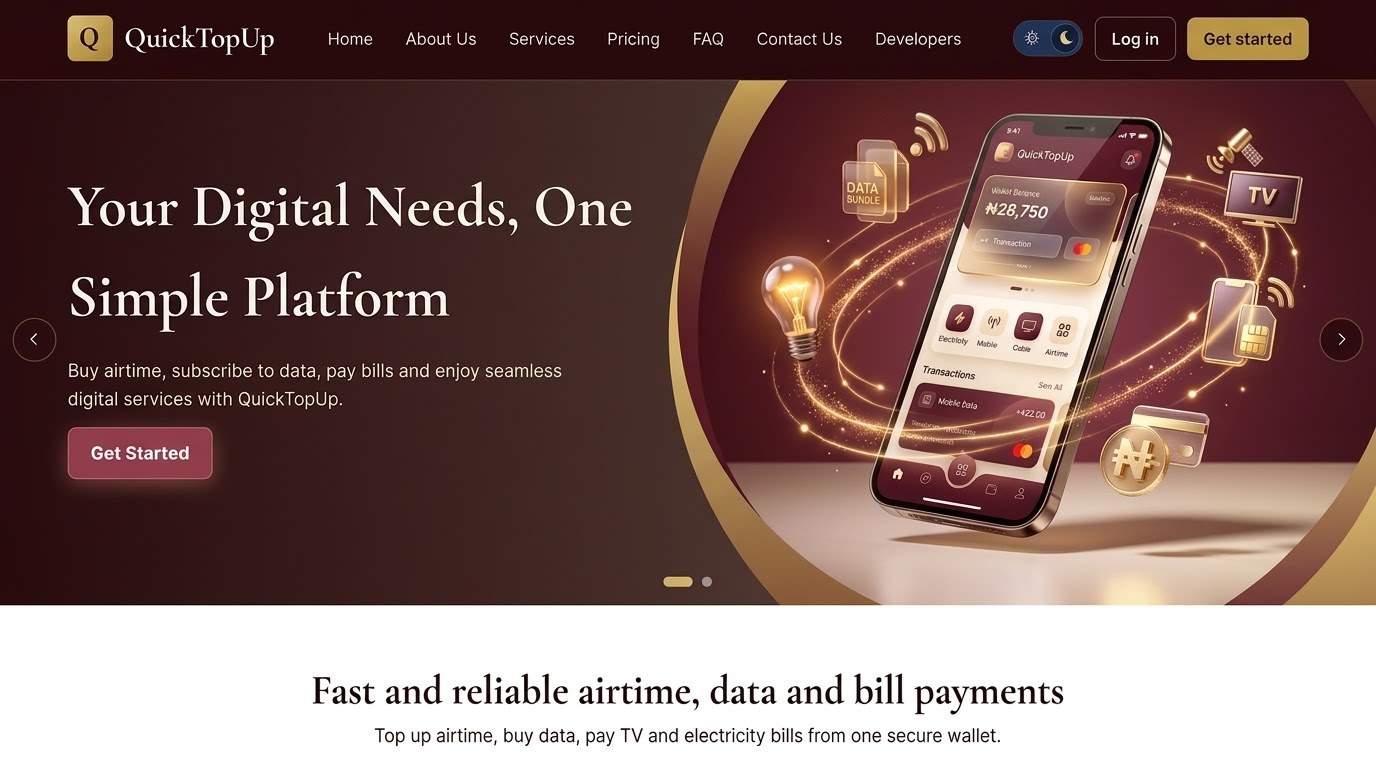
QuickTopup – A Complete VTU Website for Starting Your Own Digital Services Business
QuickTopup is a complete VTU and digital payment platform for selling airtime, data, cable TV subscriptions, electricity, exam pins and recharge cards. It features customer accounts, wallet funding, automated transactions, API integration and pricing management.
Read more →